
1. Find the right balance of age and technology
Many growers begin their search by setting a budget and identifying the right machine size, then focus on late-model combines with suitable hours, condition and technology
These machines often offer an excellent balance between value and capability. They're modern enough to include many of today's productivity-enhancing technologies while providing meaningful savings compared to purchasing new.
"One thing buyers sometimes overlook is how much technology has advanced over the past decade," said Jeff Madsen, remarketing manager at CLAAS. "Moving from an older machine into a 2020 or newer model isn't just about lower hours. You're gaining automation and precision tools that help improve harvesting efficiency."
Features like CLAAS CEMOS, the operator assistance system and other machine optimization systems can help operators maximize throughput while reducing grain loss and improving overall performance. As demand for quality used combines remains strong, well-maintained machines in this age range often sell quickly. If you find one that checks the right boxes, don't wait too long.
2. Look under the hood
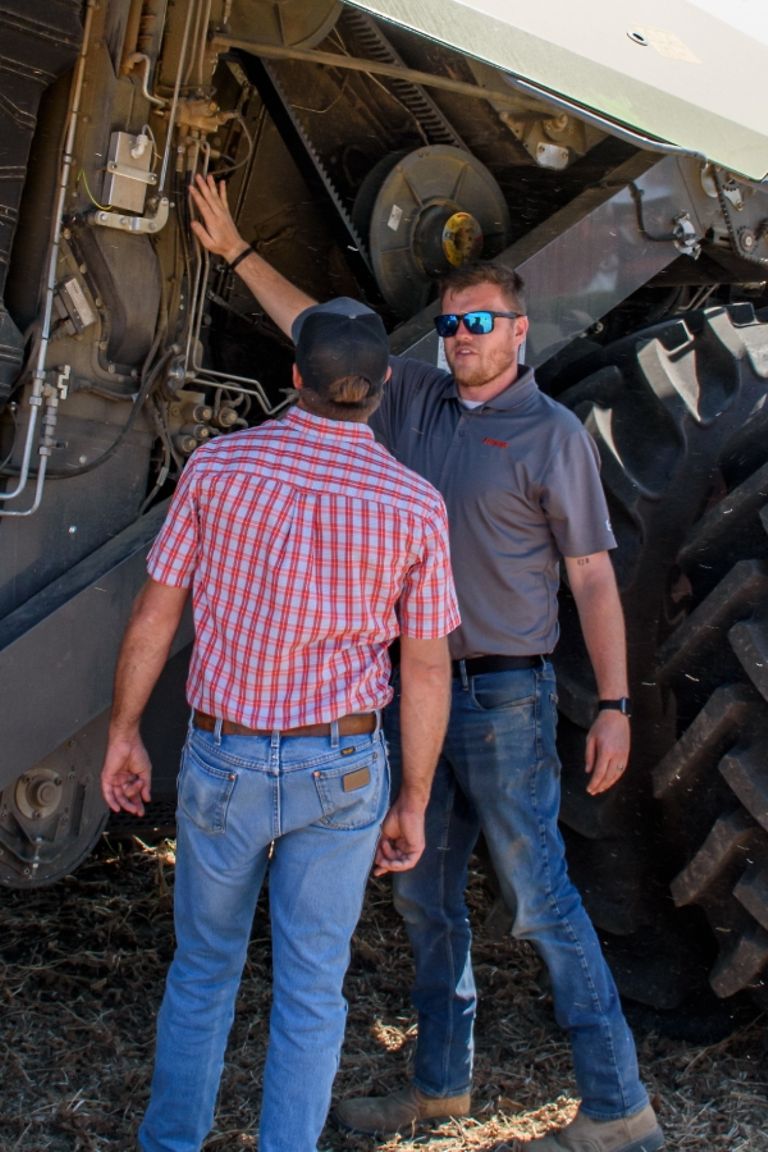
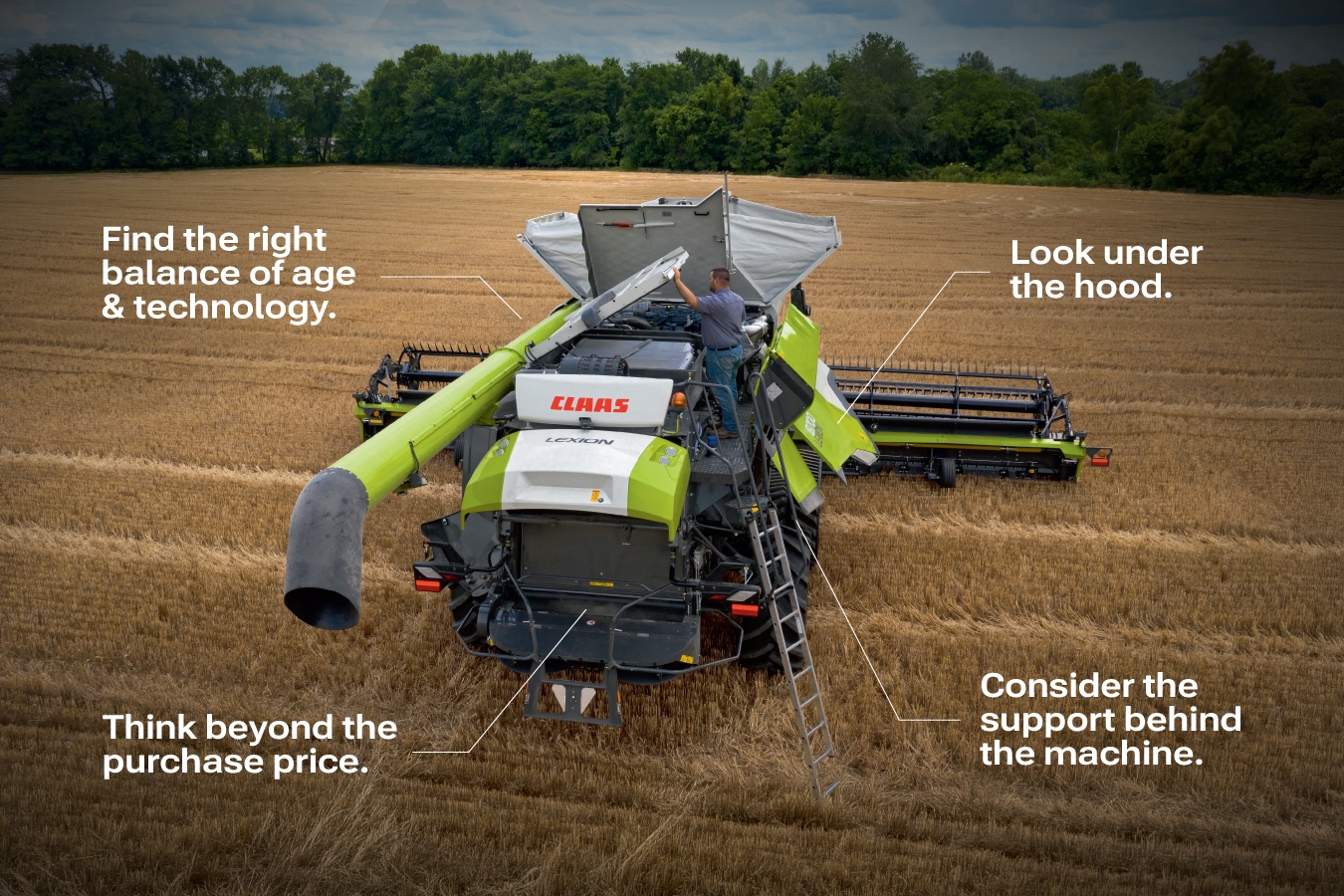
Looking under the hood of any piece of equipment you’re planning to add to your fleet is a no-brainer. But, a machine that has been professionally inspected, serviced and certified can provide far greater confidence than one sold strictly "as-is."
Knowing the service history can help you better understand what to expect once the machine enters your operation.
CLAAS also offers MAXI CARE protection programs on qualifying used equipment up to six years old, providing additional protection on key machine components and helping reduce uncertainty during harvest.
3. Consider the support behind the machine
It’s a well-known point that the dealer and parts network supporting your combine can be just as important as the machine itself.
Even the most dependable equipment occasionally needs service or replacement parts. When that happens, having quick access to knowledgeable technicians and readily available parts can make all the difference.
"Downtime is one of the most expensive things a farm can experience during harvest," Madsen said. "That's why CLAAS continues investing in our North American parts network so growers can get back in the field as quickly as possible."
CLAAS dealers are backed by strategically located parts distribution centers in Columbus, Indiana, and Regina, Saskatchewan, helping deliver parts quickly across North America while also supporting dealer training and technical expertise.
4. Think beyond the purchase price
When comparing used combines, consider the total cost of ownership over the years you'll own the machine. Financing options, maintenance history, protection plans, expected repair costs, technology, resale value and dealer support all contribute to the long-term return on your investment.
Sometimes spending slightly more upfront on a well-maintained, certified machine can reduce unexpected costs and improve resale value down the road.
"Weigh everything together," said Madsen. "Financing options, protection plans, maintenance costs and field performance all provide a much more complete picture of value than price alone."
Find the right used claas.livebine
Whether you're upgrading an older machine or expanding your harvesting capacity, today's used combine market offers more choices than ever before.
Across the U.S. and Canada, trained and well-equipped CLAAS dealers can answer your questions, help you compare machines and protection programs, explain each machine’s history and support your operation for seasons to come.
Ready to start your search? Visit your local CLAAS dealer to explore available used combines and learn more about certified pre-owned equipment and MAXI CARE protection options.